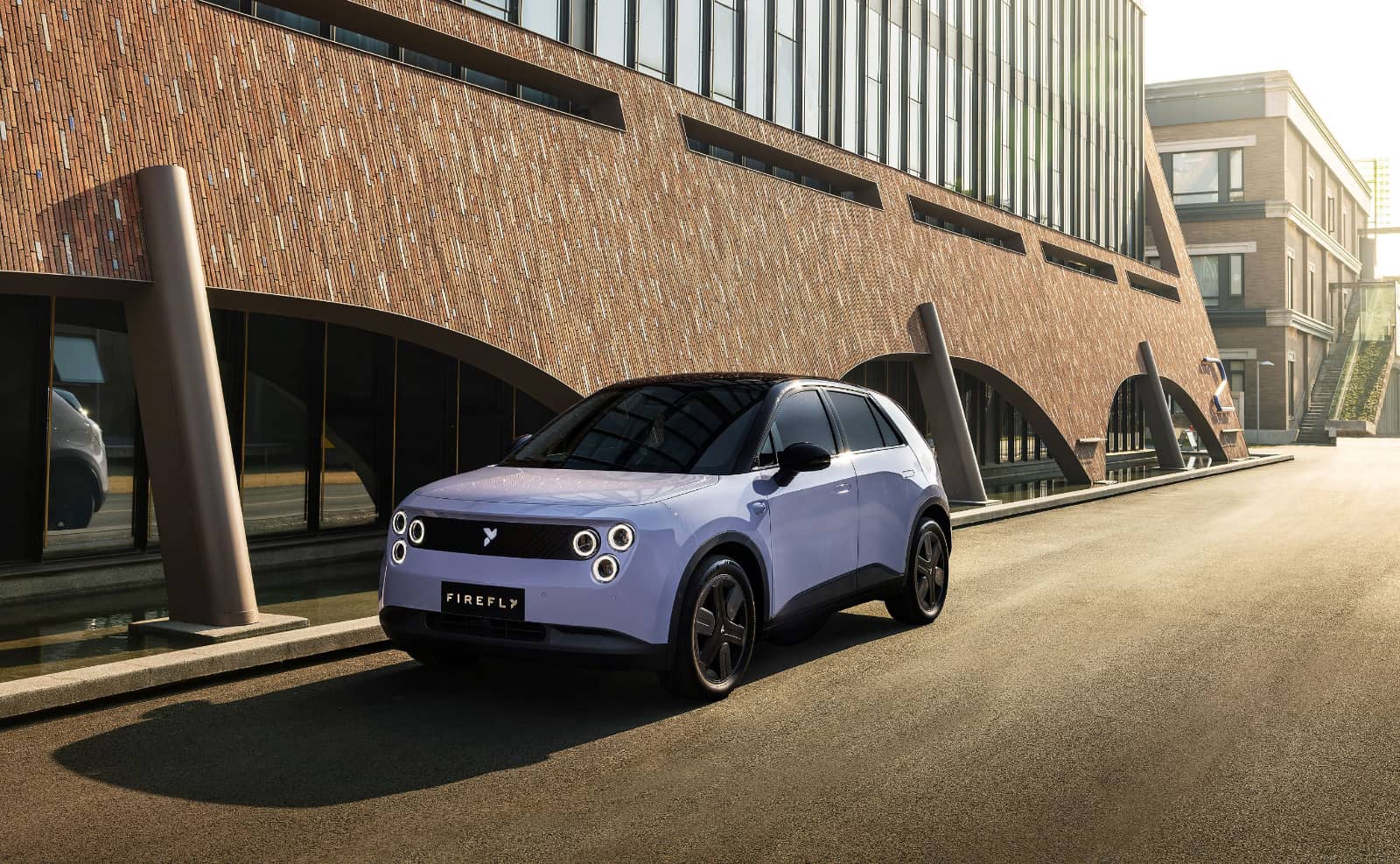
NIO built its reputation on premium electric vehicles and a battery-swap network, then decided the logical next move was to go smaller.
Firefly is the result: a subcompact electric hatchback aimed squarely at urban drivers who want a genuinely usable small car without sacrificing tech, safety, or the kind of interior quality that usually gets value-engineered out of anything under four metres.
The most striking thing about the Firefly isn't the styling — it's the safety score. A 96% adult protection rating from Euro NCAP is extraordinary for any car, let alone one competing in the budget end of the EV market.
Pair that with a battery-swappable architecture (NIO's fifth-generation swap stations roll out from 2026), 100 kW DC fast charging, and more than 30 standard ADAS features, and you have a small car that reads considerably above its price tag.
Firefly is due in Australia in 2026, competing against the BYD Dolphin, MG4, and the lower-spec variants of the Volvo EX30. The trade-off to flag early is range — 330 km WLTP won't concern inner-city buyers, but anyone with longer commutes or regional trips will notice it.
Design
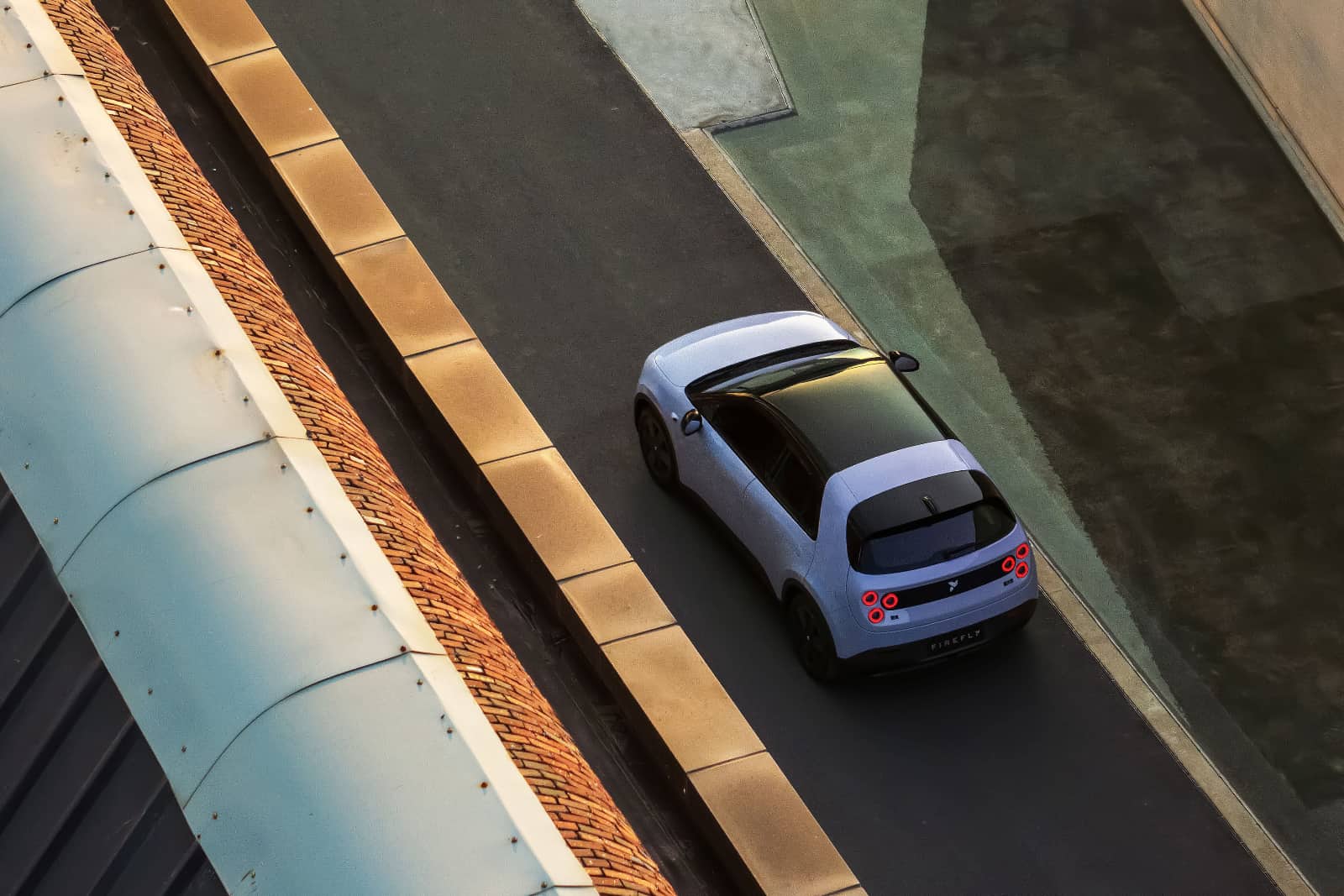
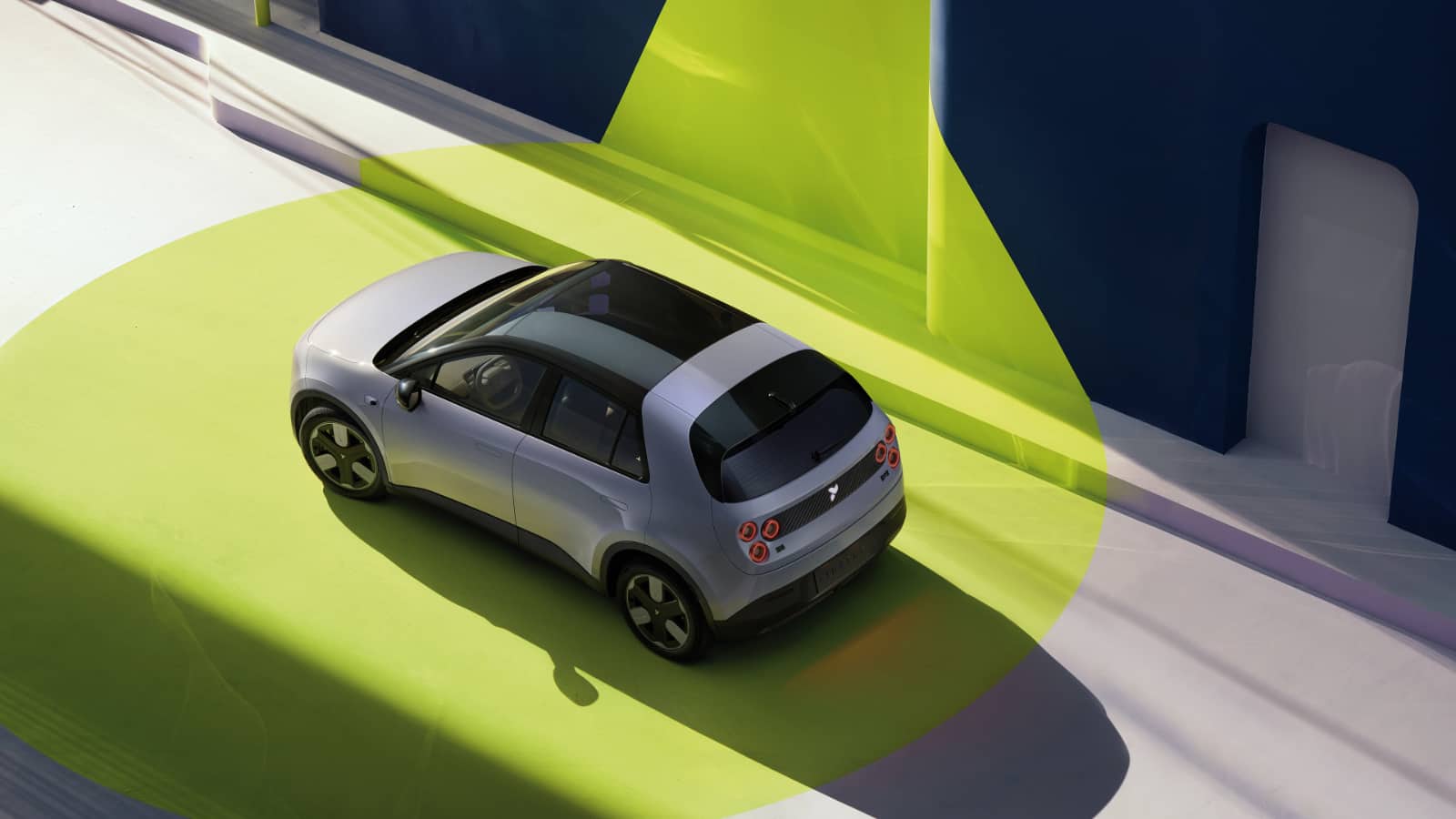
NIO Design Vice President Kris Tomasson led the Firefly's exterior, and the most distinctive call was the front and rear lighting: three circular rings clustered together, connected by a black pill-shaped accent bar — an unusual signature that actually works.
The black-painted roof, mirrors, and pillars are standard, broken only by a body-colour loop connecting the C-pillars over the roofline. The rear uses a clamshell liftgate with an aerodynamic spoiler.
Six exterior colours are offered — lime, lavender, marble, sand, and graphite — and the interior comes in four colourways: travertine, pine, plum, and obsidian.
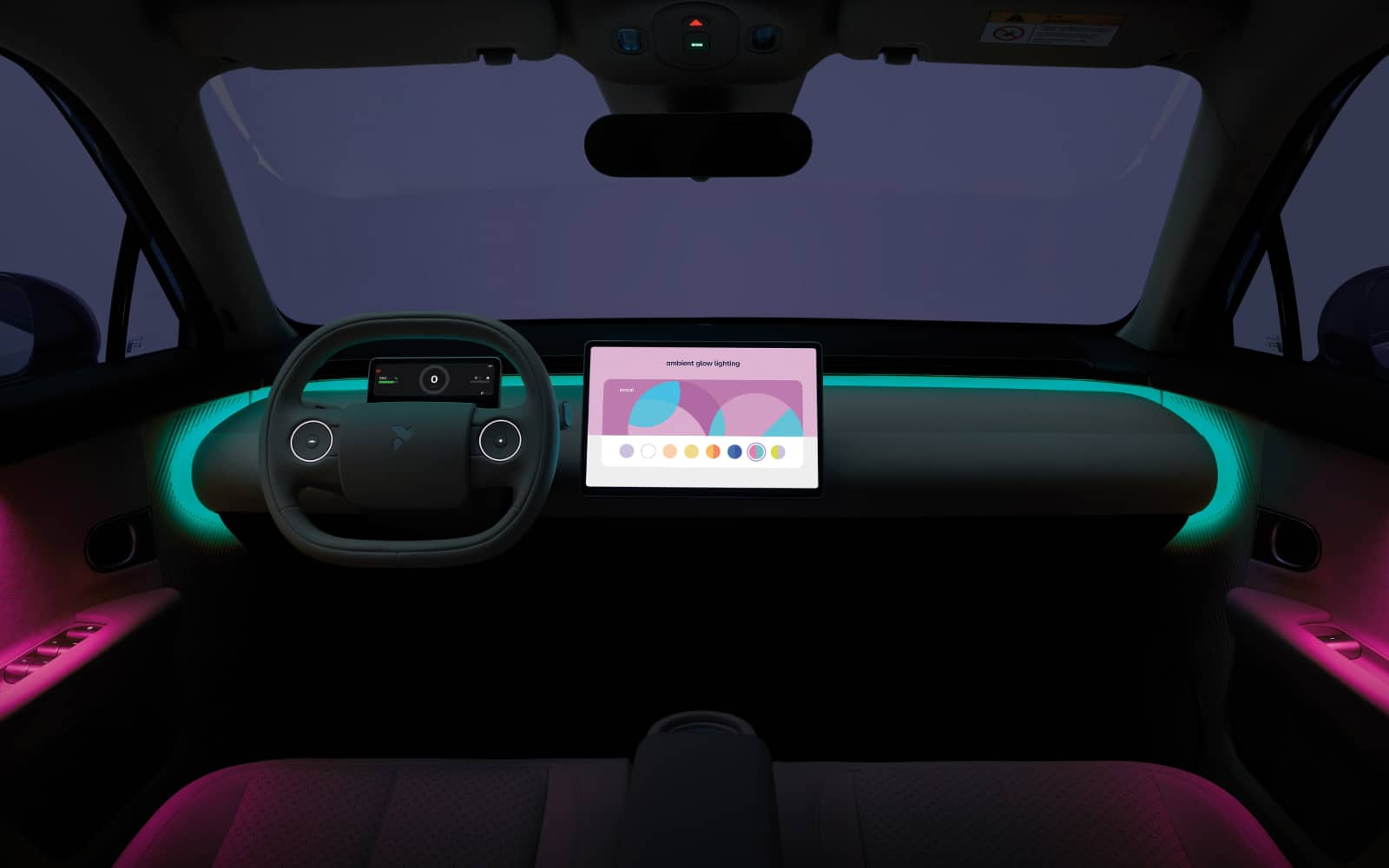 Mood lighting in the Firefly. Custom mood lighting.
Comfort
The cabin makes good use of a flat floor and a front bench concept, letting occupants slide across without climbing over a centre tunnel — genuinely useful in tight parking situations. The floating centre console opens up storage rather than dividing the cabin.
Up front, seat options include a 10-way adjustable leatherette unit with ventilation and massage; the rear splits 40/60 and fits three passengers with reasonable legroom for the class. The 13.2-inch touchscreen and 6-inch instrument cluster are current-generation spec, and the 14-speaker Dolby 7.1 audio system is a legitimate surprise in this segment. Boot space is 335 litres, with a 92-litre frunk and a washable interior with a drain plug.
That storage is also interesting: you'll find spots under the seats to keep bits and bobs. Flip the rear seats up for a canal of a cupboard, and a spot under your front-seat bottom for a tablet and camera. Always there when you need it.
Safety
The Firefly hasn't been through ANCAP testing yet, though the brand says it was engineered to meet five-star Euro NCAP requirements — and it delivered, achieving a 96% adult protection score in Euro NCAP assessment, the highest recorded for any passenger car since early 2024. It also holds a five-star 2024 C-NCAP rating.
Standard equipment includes nine airbags (including a dual-chamber farside-centre airbag to prevent occupants colliding with each other), an ultra-long side curtain airbag, and more than 20 sensors and cameras. The ADAS suite runs on a Horizon Robotics Journey 5 chip (128 TOPS) and covers automatic emergency braking, lane keeping, blind spot monitoring, highway lane-change assist, automated parking, and driver attention monitoring — all standard.
Performance
One rear-mounted permanent magnet synchronous motor produces 105 kW and 200 Nm, driving the rear wheels through a single-speed transmission.
The 0–100 km/h sprint takes 8.1 seconds and top speed is 150 km/h — neither figure is exciting, but neither is embarrassing for urban use. The 41 kWh usable battery delivers 330 km on the WLTP combined cycle.
DC fast charging peaks at 100 kW, covering 10–80% in 29 minutes; AC charging supports up to 11 kW three-phase. Vehicle-to-load (V2L) functionality is included. The multi-link rear suspension was co-developed with Multimatic, and the 50/50 weight distribution should give it a composed feel — though that's based on spec rather than a driven assessment.
A genuinely well-equipped urban EV with an extraordinary safety pedigree and a price point that should undercut most of the competition once Australian figures land. The 330 km WLTP range keeps it honest, and NIO's dealer and charging infrastructure in Australia is still unproven — but if the brand executes the local rollout cleanly, the Firefly is worth serious attention.